Anonymity Effect on Self-Censorship in Student Groups
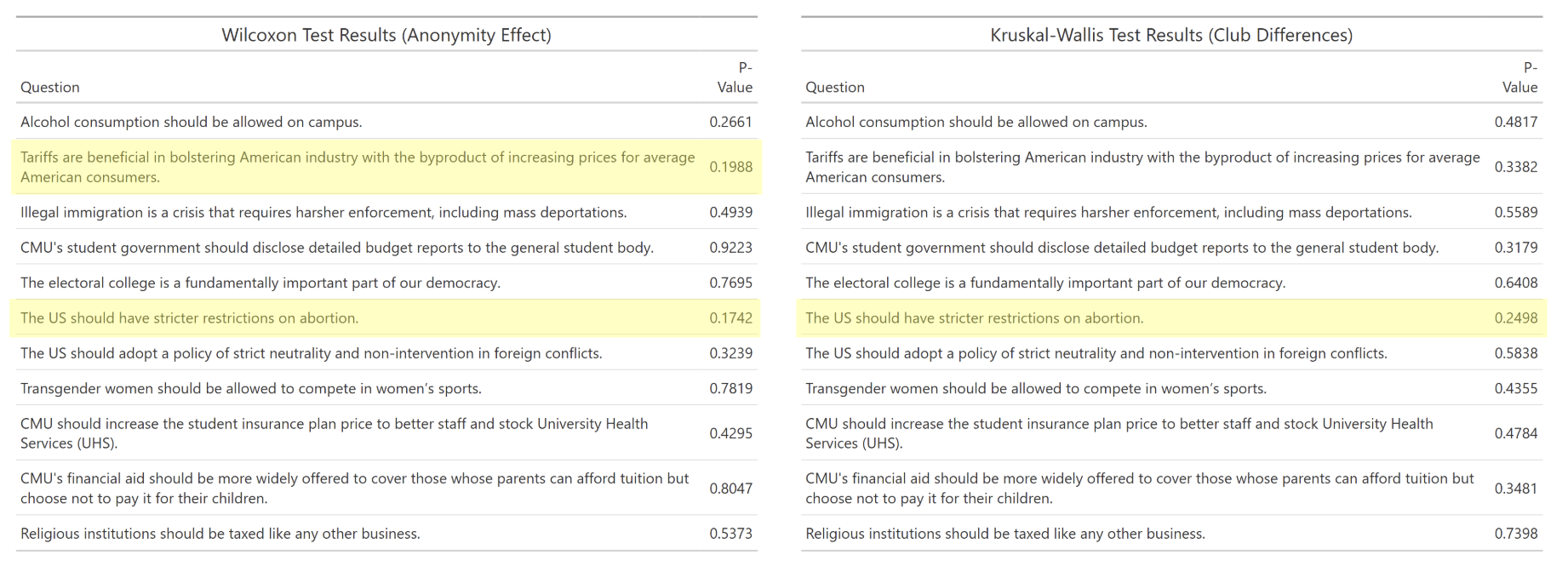
For the Bubbles: Data Science for Human Minds course, my teammates and I conducted a study investigating how anonymity influences political self-censorship among CMU students. We designed two parallel surveys—one anonymous and one non-anonymous—posed identical questions on U.S. politics and campus issues, and collected responses across major student organization categories, including Greek life, athletics, cultural groups, and academic clubs. We performed exploratory and statistical analyses to compare how opinions shifted from the treatment effect (between anonymous and identifiable respondents).
Through this project, we examined how social pressure, identity, and group membership shape political expression. We found that anonymity influenced responses more than organizational affiliation, highlighting the subtle but tangible role of social desirability in campus political discourse.
Conclusion:
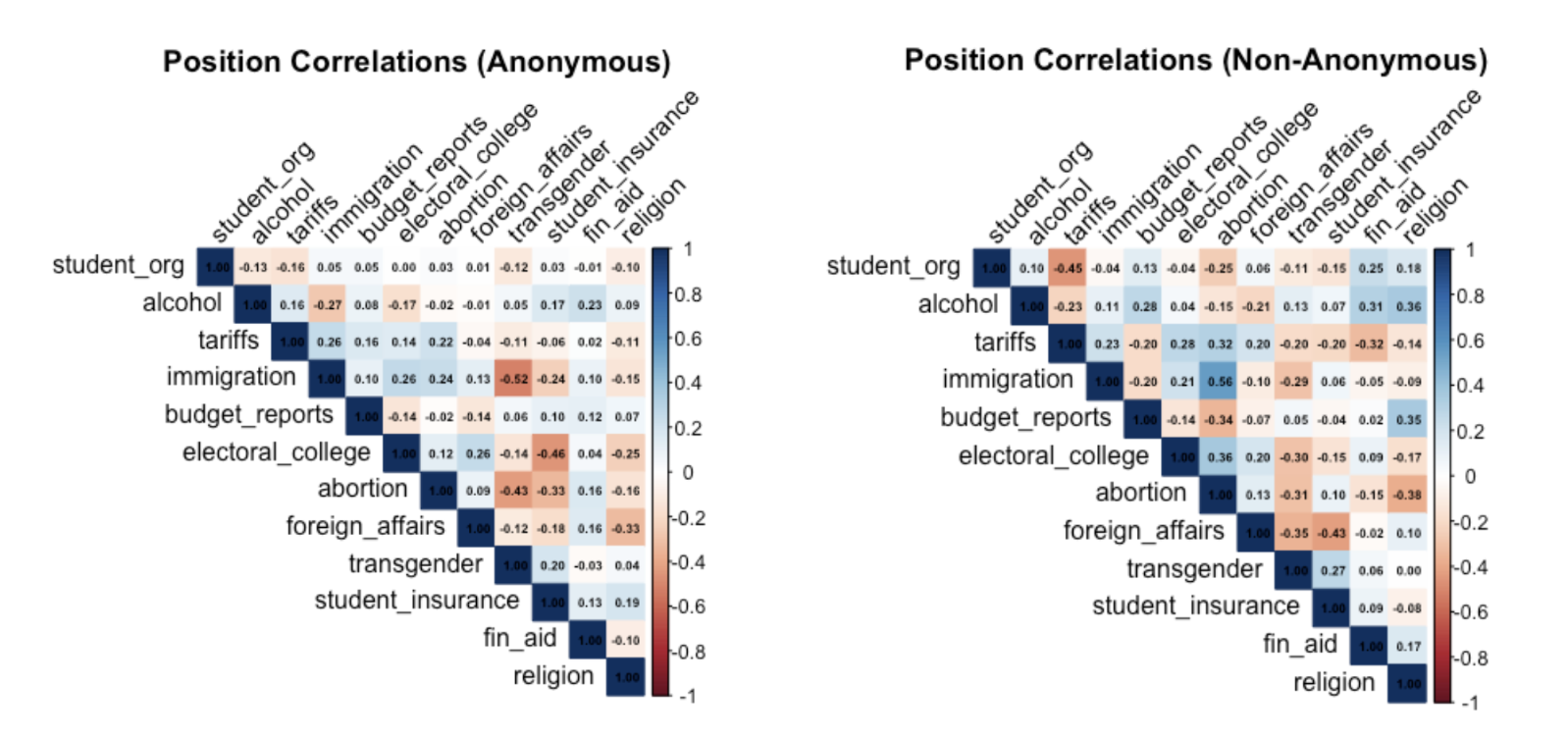
While the statistical tests did not show strong significance overall, there are visually observable differences in patterns—for instance, anonymous respondents showed a notable negative correlation between immigration and transgender-sports opinions, indicating greater willingness to express socially controversial views when identity was concealed.
Presentation Slides:
Key Results: